A city with a soul, built like good software.
Planned first for about 15,491 acres near Pioneer, Tennessee, and designed to repeat: from Appalachian mountain valleys to, one day, Platonic Atlantis in the Sahara. A place residents want to move to, founders want to open their companies in, and operators build lasting industries.
Site 01 (Tennessee) in negotiation, letter of intent prepared · Multi-site civic engine
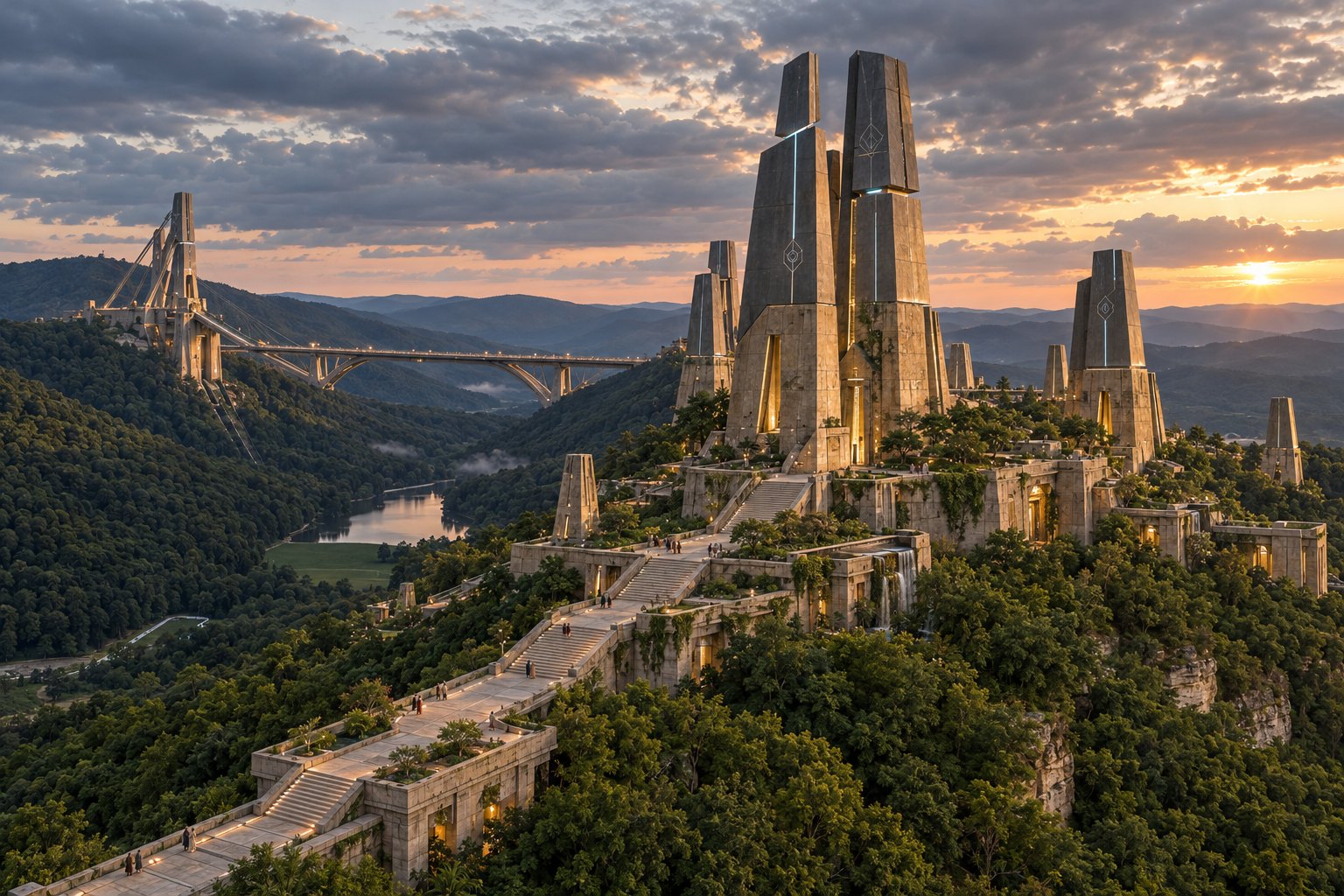
A real city, designed on purpose.
Not a farm. Not a commune. Not a campus. Not a real-estate pitch.
A real city, with a plan for how it learns.
It gathers what its people want to build, learn and become. It maps what each of those things depends on. Then it turns them into missions, teams, zones, contests and festivals that make them real.
In the Republic, Plato reads the city as the soul in larger letters. We take that as a design brief: a city that notices what its people need, learns, and gets better each season.
The company behind it already ships software. Build Civilization, Inc. has built a learner, vision AI that keeps learning after it ships, and the OS, an app where people find each other and do real things together. The city is where those pieces come together.
Most cities are places you get through. This one is built to help you grow.
Every city begins small.
The long-range design is 50,000 people across 5,040 zones. 5,040 is the number Plato gives his city in the Laws.
It does not begin as a finished world. It begins with fifty: the first residents, the first operators, the first industries, the first calendar, and the first loop that proves the city can start moving.
The people who come first are not arriving at the end of the story. They write the first chapter.


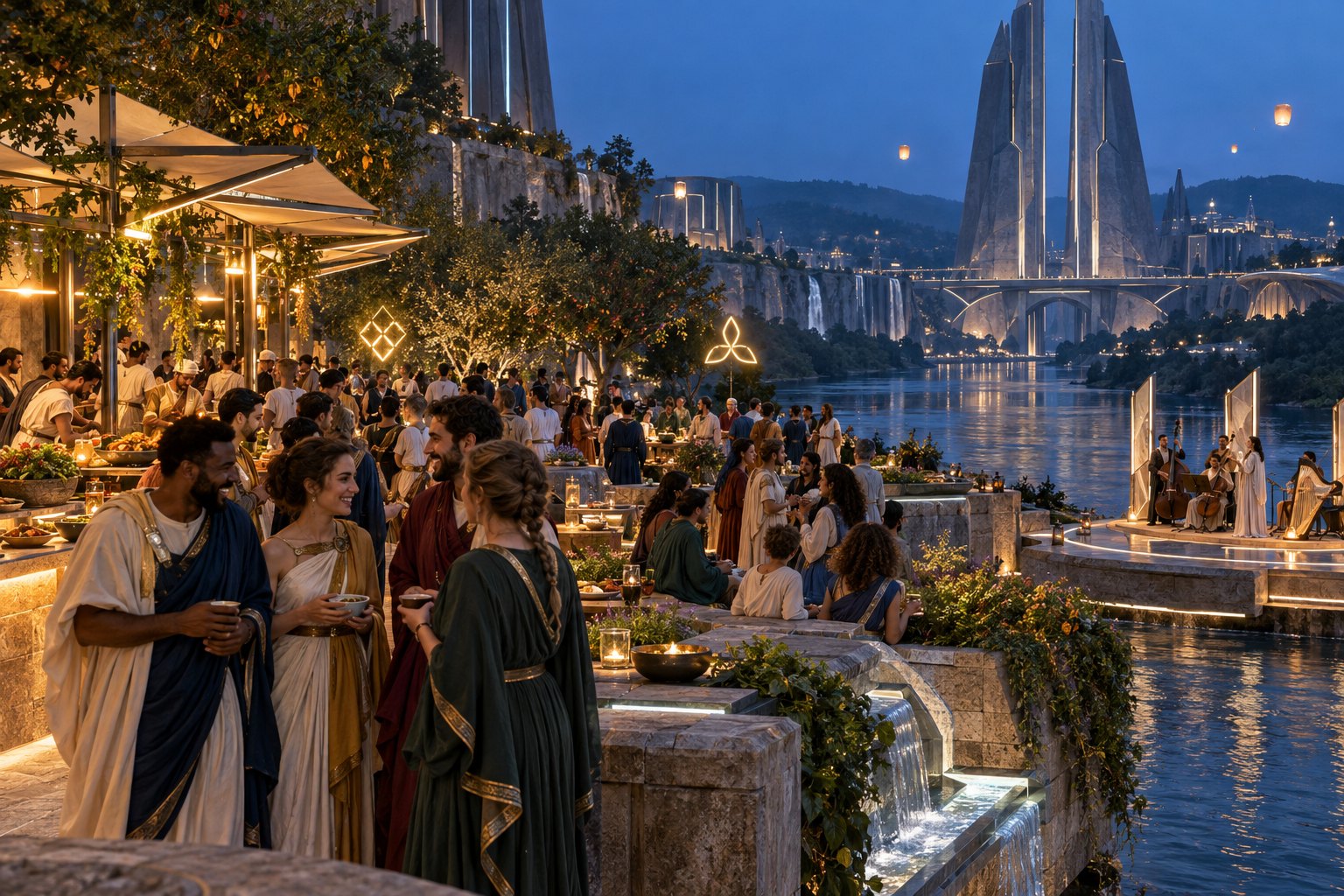
At full scale, the city feels alive.
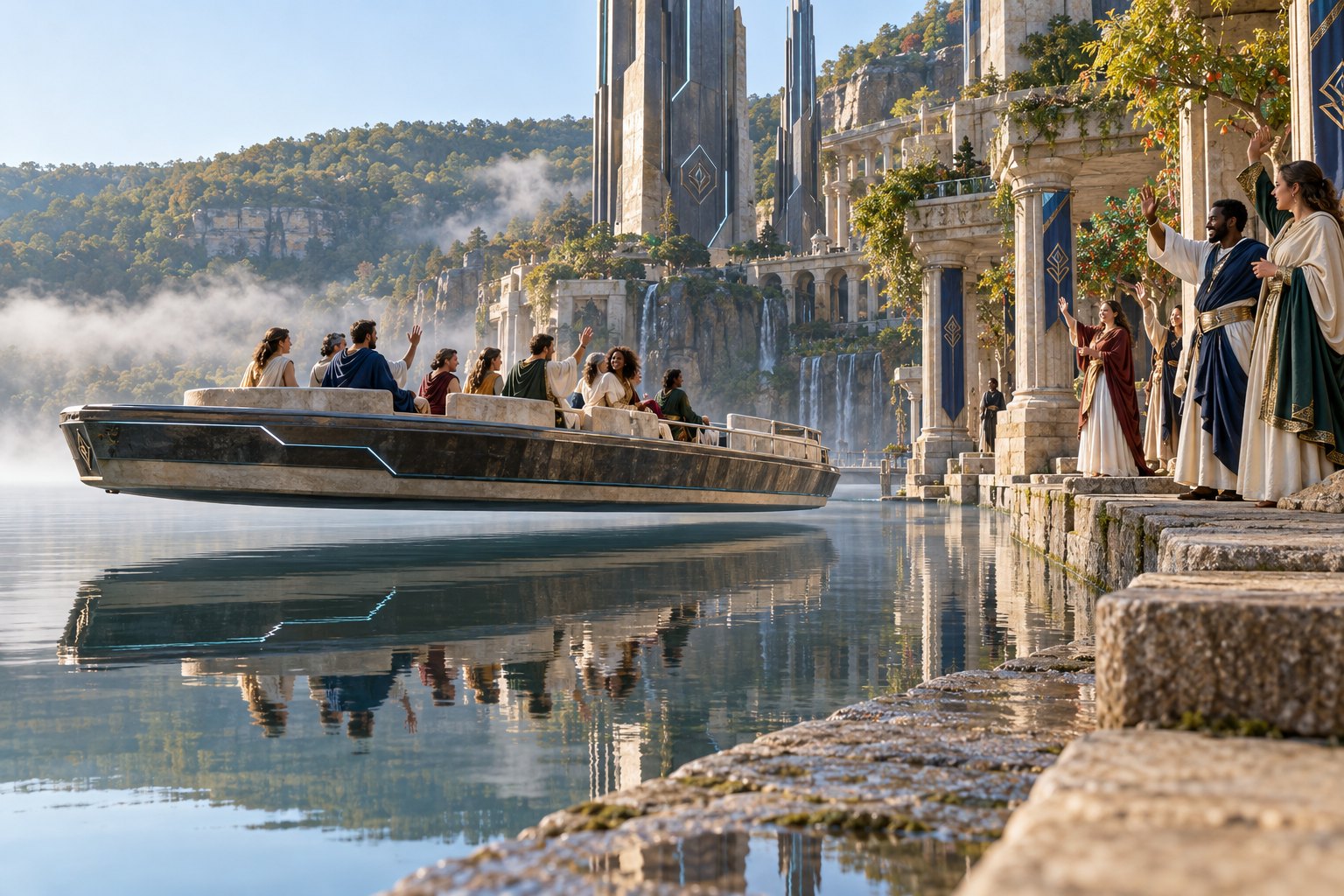
Not on day one. This is the long-range design. The pictures in this section are renderings, not photographs.
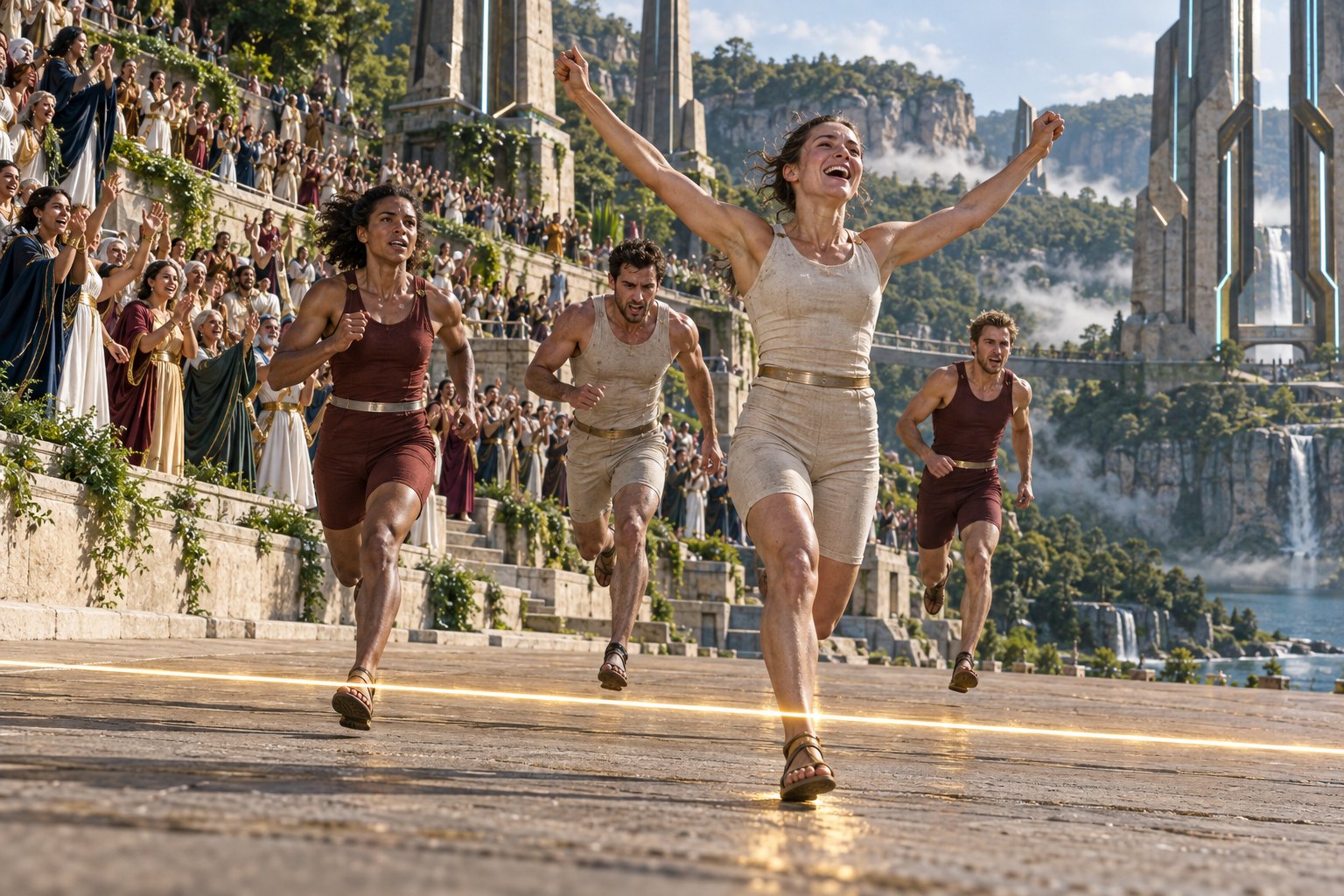
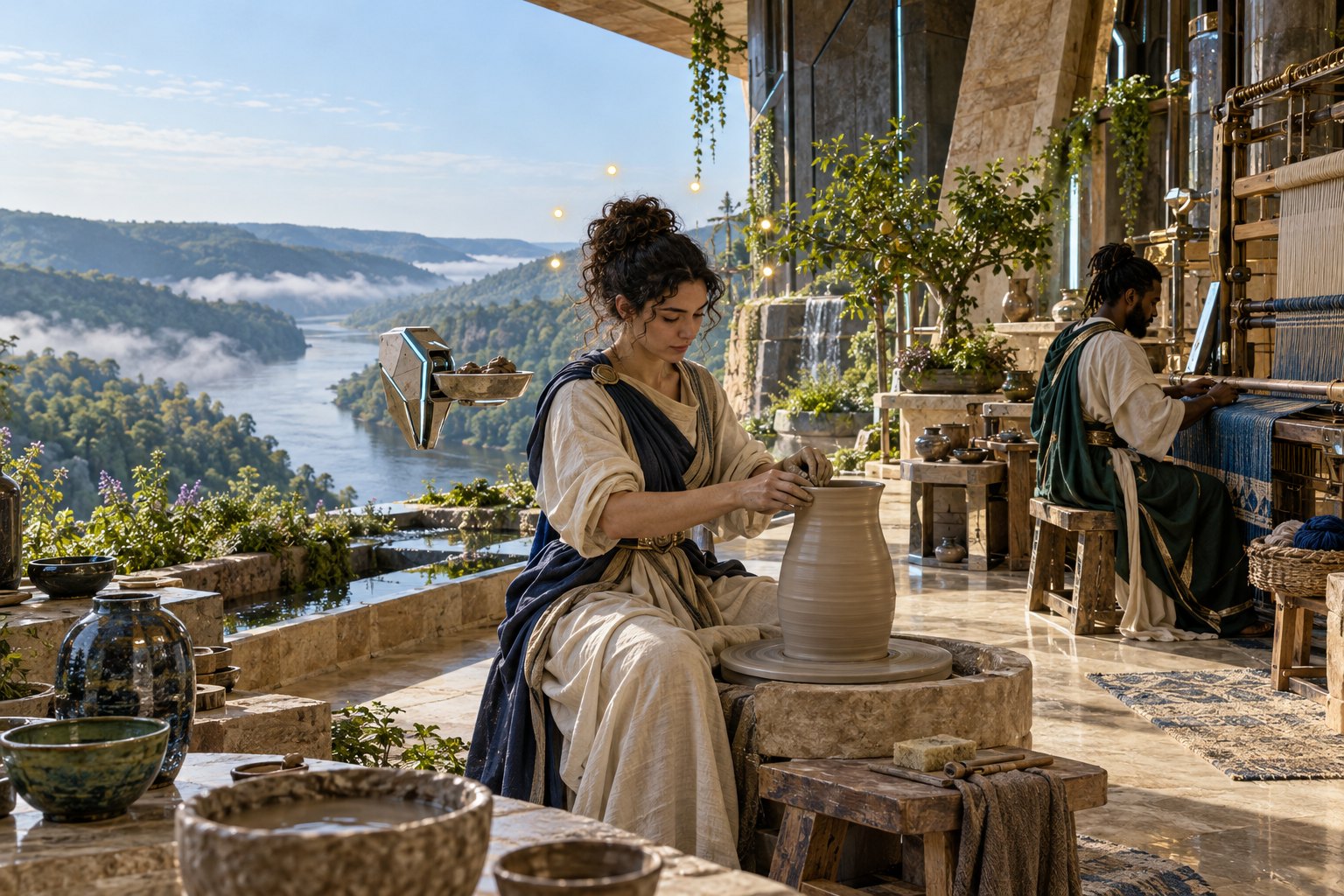
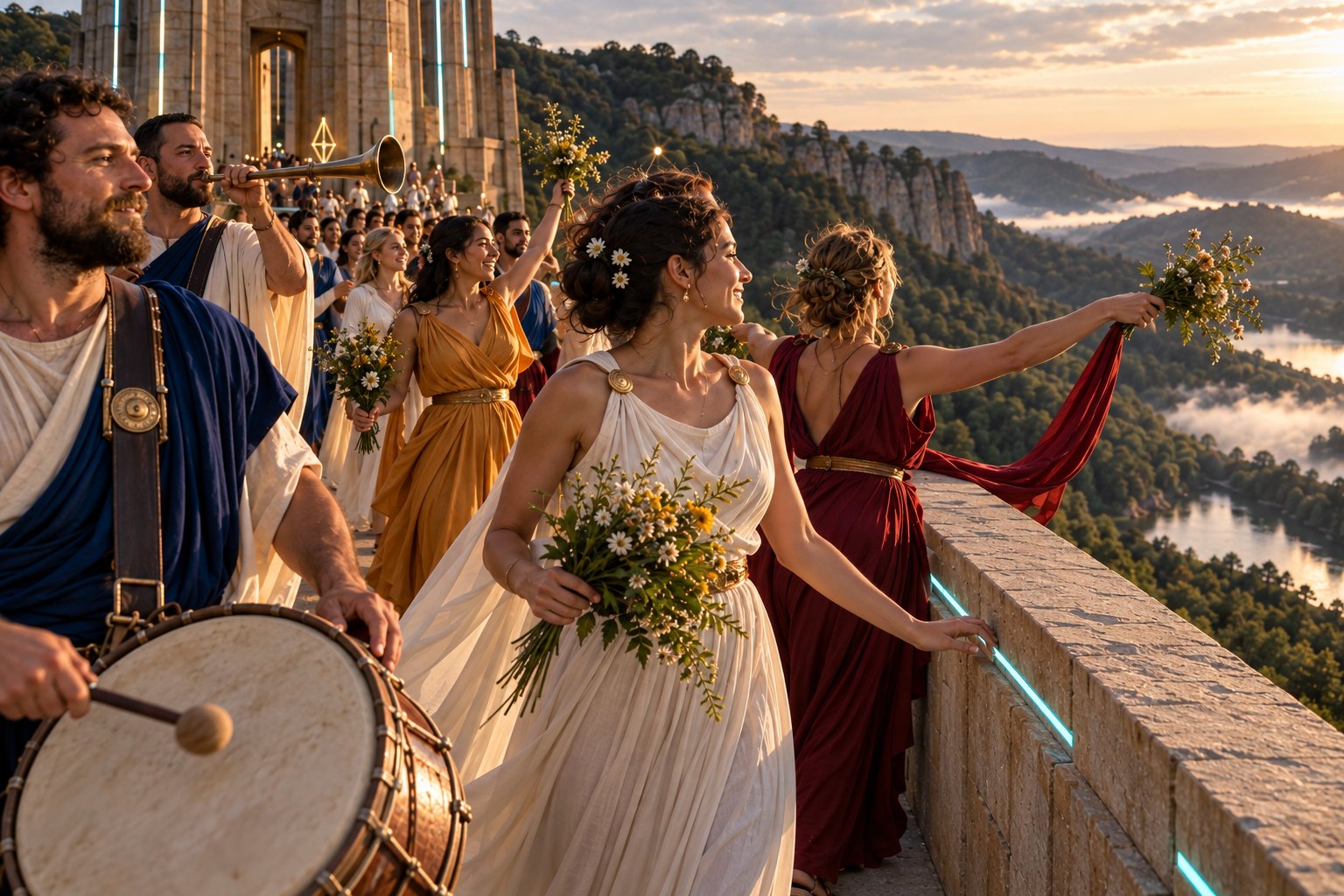
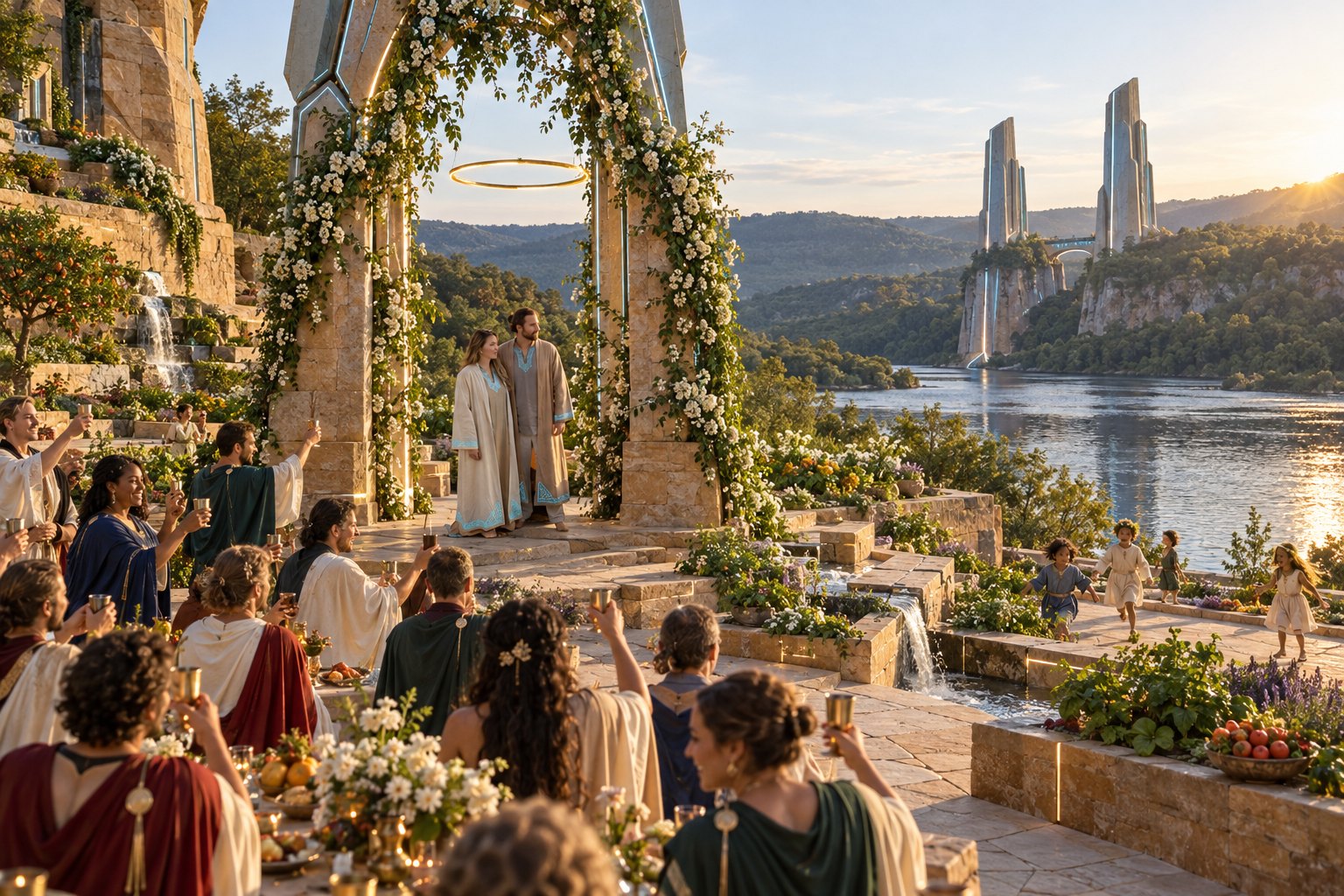
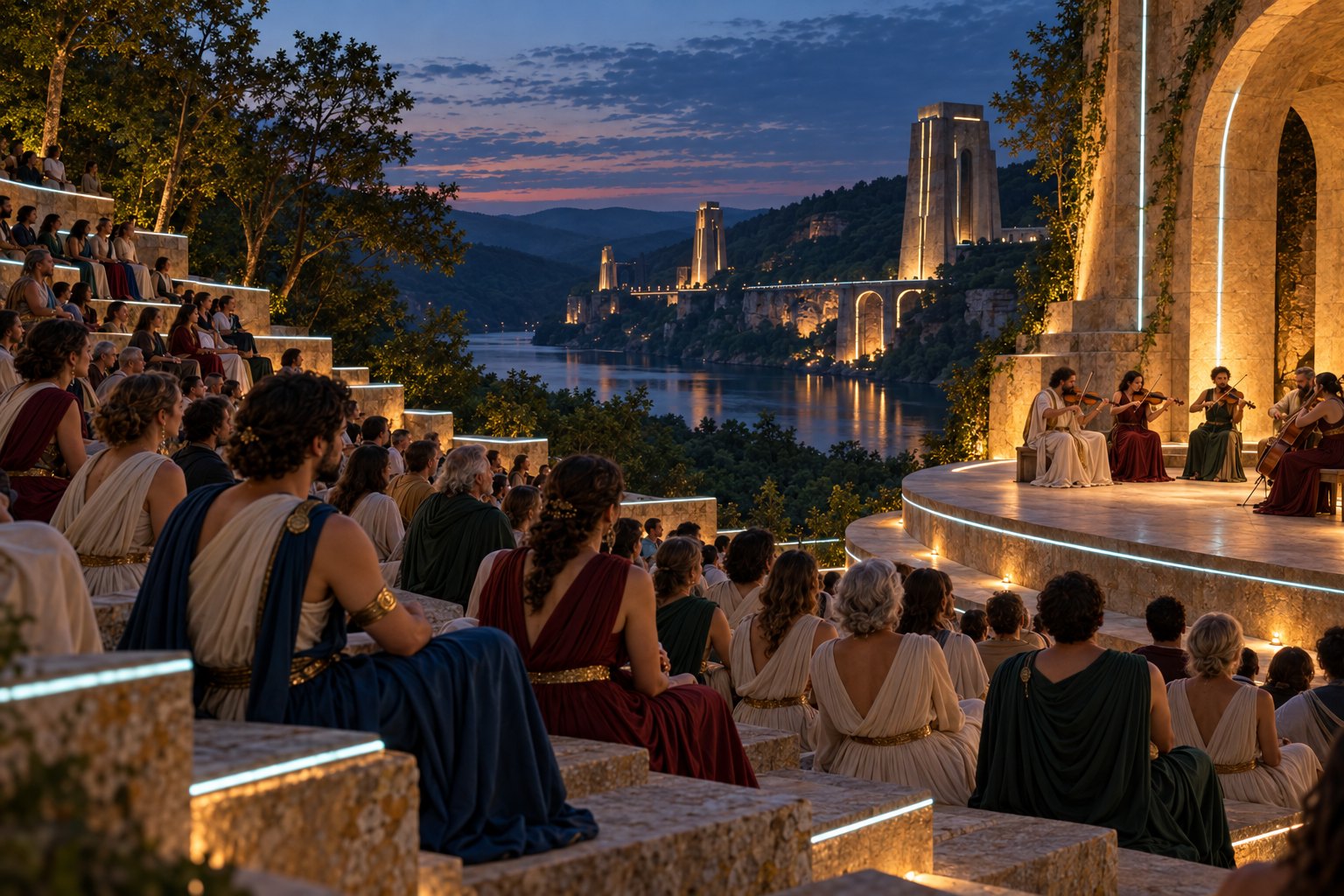
Phase 4 · Long-range vision (20+ years). Renderings. Festivals every day; celebration marks the work.
At full scale, the city runs across 50,000 people and 5,040 zones, organized into twelve domains of life— home, making, learning, trade, beauty, health, defense, governance, agriculture, infrastructure, hospitality, and transformation.
Hundreds of contests and festivals run across the city every day.
The city learns what kinds of people, projects, places, rhythms, and teams bring out the best in each other — then uses that knowledge to reshape the daily calendar: who meets, what gets built, which domains get investment, which celebrations mark real achievement, which technologies unlock the next age, and which parts of ordinary life can be automated away.
It starts to feel less like a place you live and more like a place that knows you.
- A city that knows which friendships deepen each other.
- A city that knows which environments sharpen invention.
- A city that knows which rituals produce loyalty, beauty, and meaning.
- A city that knows which bottlenecks to remove so more of your day belongs to what matters.
The result is not just efficiency. It is a different quality of life.
Better friendships. Better work. Better training. Better health. Better access to resources. Better environments for invention. Better odds that your day contains something worth remembering.
Build it far enough, and the city stops being a backdrop. It becomes a place that knows you, challenges you, puts you with the right people, and helps make more of what you care about real.
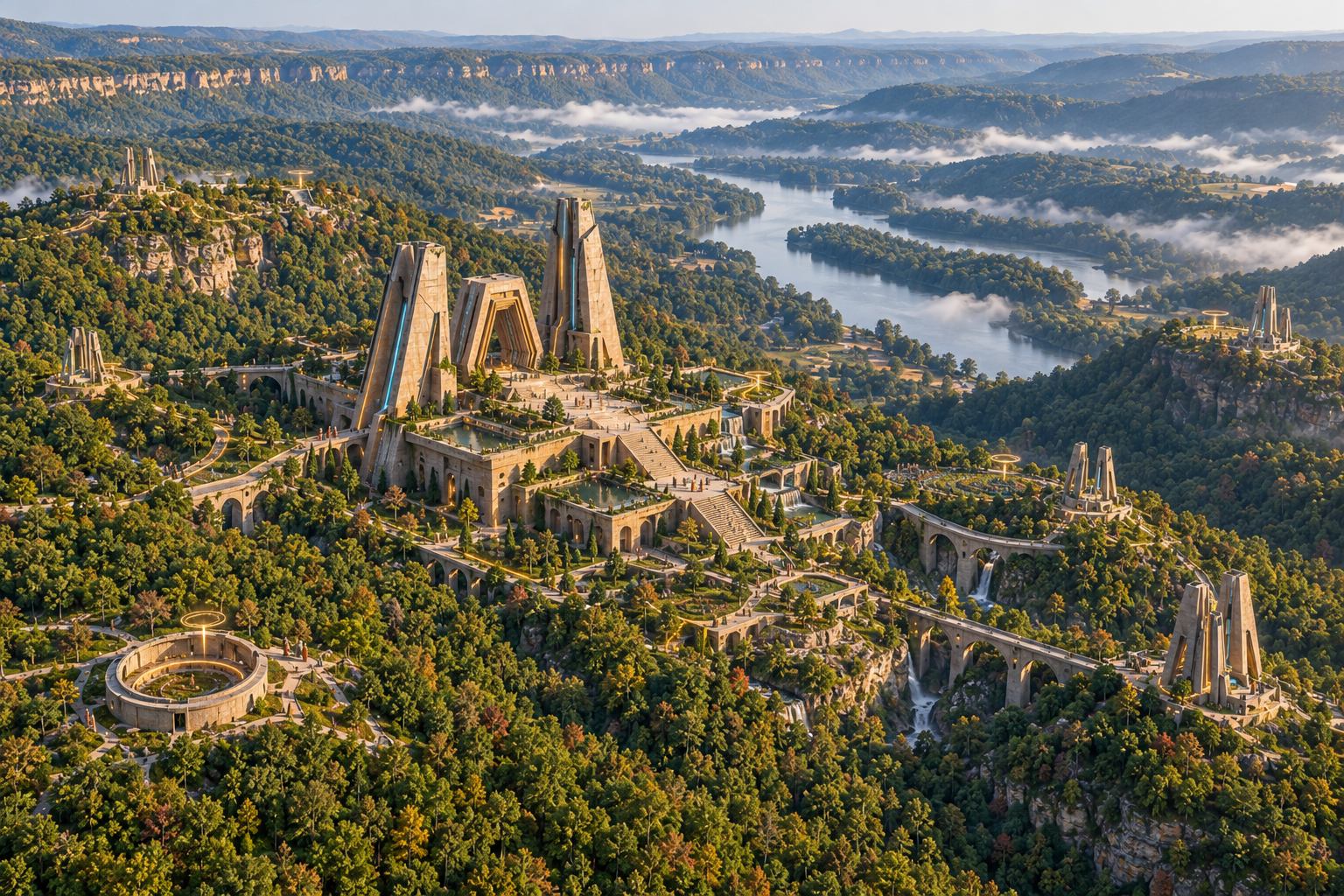
The city takes what people want and turns it into a world.
Every resident and every zone contributes what they actually care about — the things they want to build, solve, unlock, learn, and become.
- The city keeps that visible.
- It maps what those things depend on.
- It translates those dependencies into missions, teams, zones, contests, and festivals.
- When those are completed, the city gains a new capability.
- That new capability makes more things possible.
- The loop runs again. That is how the city moves through ages.
Real land. Real resources. Real work to do.
A mining company stripped the top of this land. It has grown back for about 20 years. Under it are resources that are real, and that take real setup to use.
The mountain is raw input for industry.
What is on the land, what it could become, and what it takes to get there. These four are photographs of the property.
 High purity after processing, in a lab test
Sand
Could become: Glass, solar and building materials, once a processing plant is built
 Deep seams · The surface was stripped
Coal
Could become: Energy and materials later. Deep, and not under an active mining permit today
 Producing gas wells
Wells
Could become: Gas royalties for the landowner today. On-site energy later
 About 3 miles of I-75 frontage · CSX rail within reach
I-75 + rail
Could become: Trucking and rail for heavy materials in and finished goods out
Buy the land. Form the district. Build. Repeat.
- Close on the land.
- Form a Tennessee utility district.
- Apply for grants and bonds to build roads, water and power.
- Bring on operators and industries.
- Measure what worked. Fix what didn’t.
- Build the next layer.
- Open the next age.
This is the plan for turning raw land into a working city. Each step is tested before the next one is built.
 Phase 1
Acquire and organize
Close on the land. Form the utility district. Apply for the first grants.
 Phase 2 – 3
Infrastructure and operators
Roads, water, power and broadband. The first zones open.
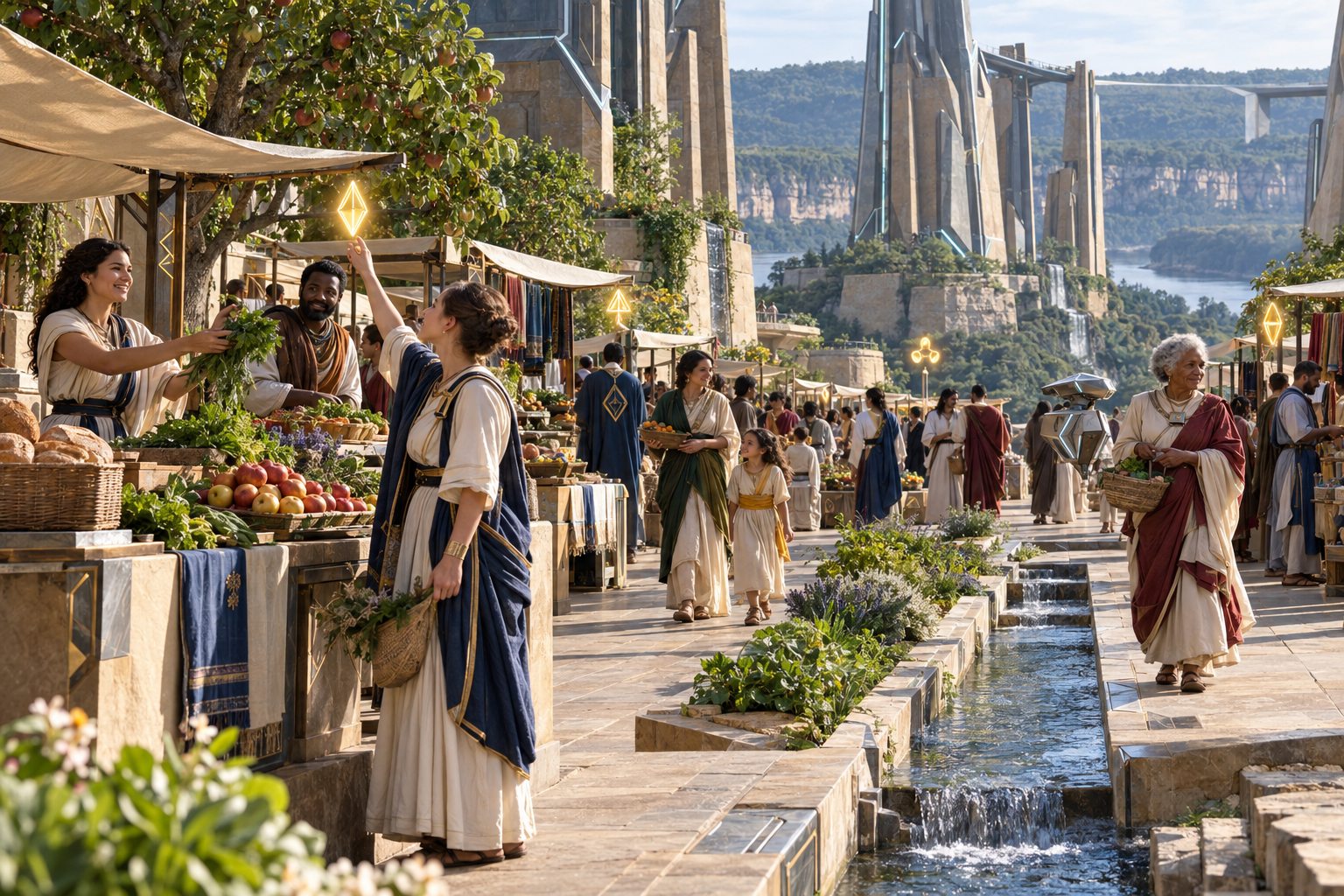 Phase 4
Full-scale civilization
The long-range design: 50,000 residents, 5,040 zones and twelve domains of life, on a calendar of festivals.
Move here. Open your company here. Scale the blueprint.
Whether you are a builder looking for a place that brings out your best work, a founder relocating a company, an investor backing a city designed to repeat, or a landowner with ground for the next site.
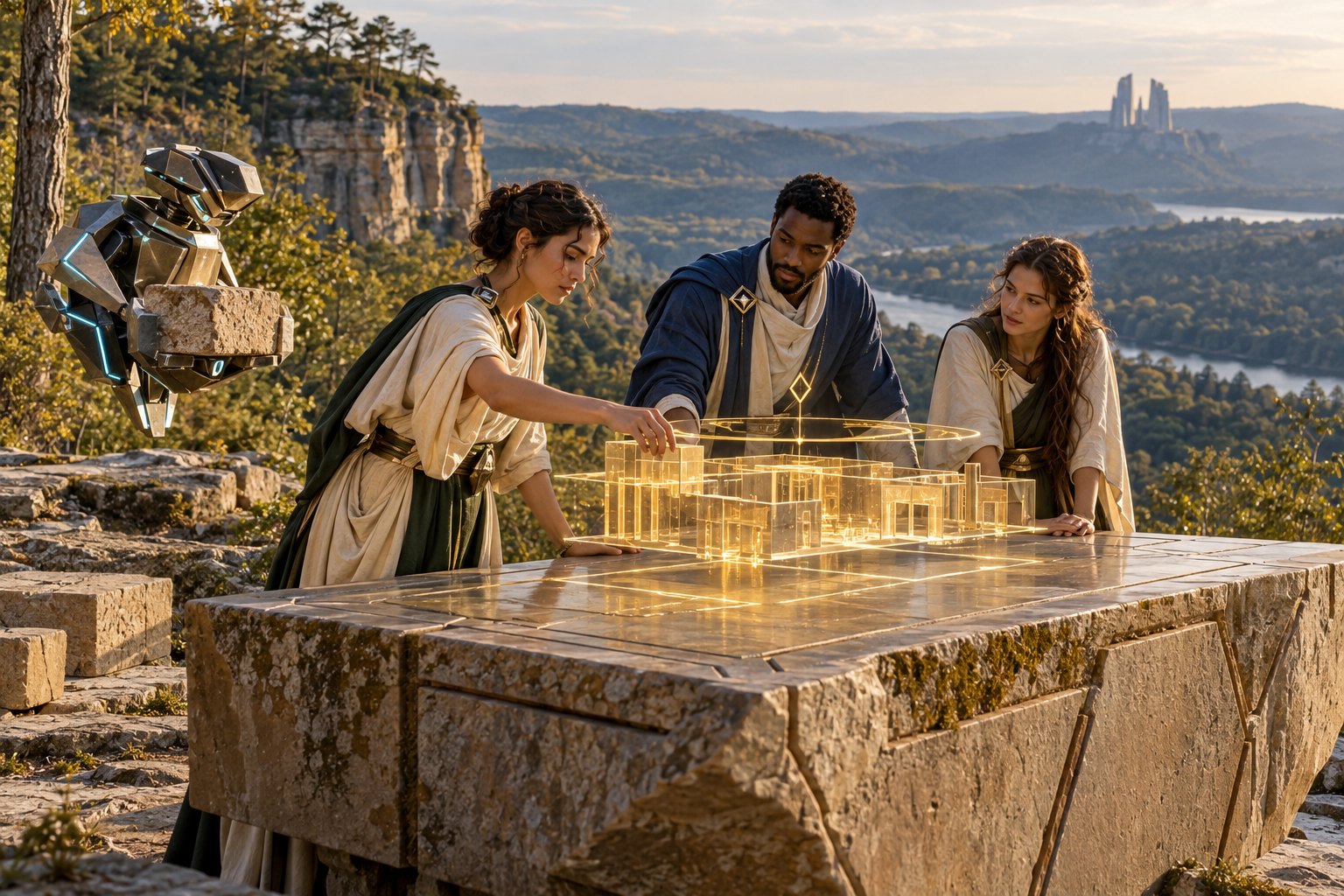 1 · Move Here & Build
Live here first, and build the first layer.
A three-to-twelve month residency for engineers, researchers, architects, designers and makers. The plan: shared meals, serious labs, daily work blocks, athletics and seasonal festivals, among peers who work at your level.
Join the First Fifty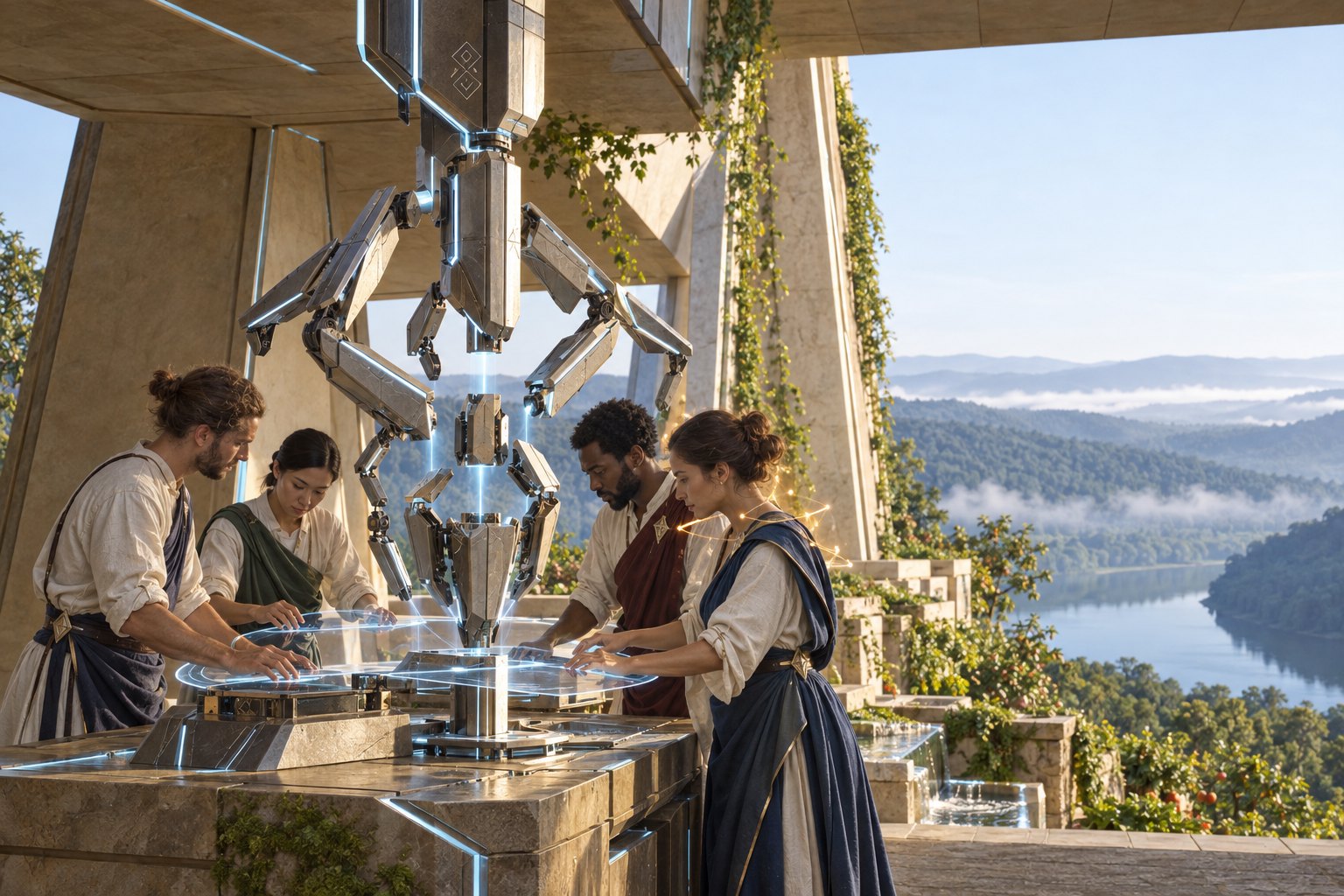 2 · Relocate or Open Your Company
Bring your company. Build your zone.
Relocate your startup or launch a core industry: robotics, CNC fabrication, glass and solar manufacturing, food systems or diagnostics. The plan: a stake in your own zone, recruiting from the Founding Cohort, and the city as an early customer and live testbed.
Open a Zone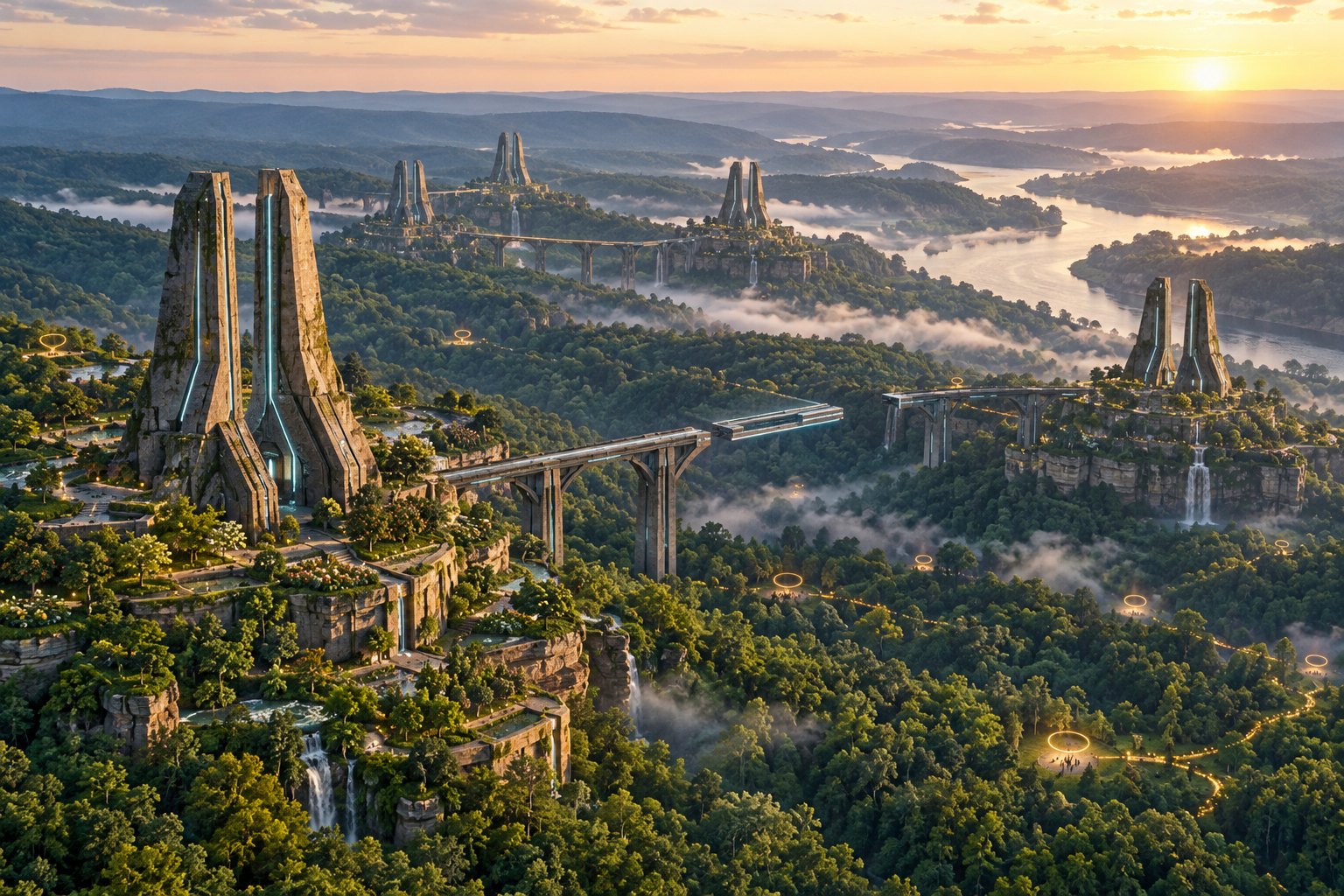 3 · Invest
Back a repeatable city engine.
Not a one-off subdivision. A city designed to repeat: coordination software, zone economics and utility-district financing, planned first in Tennessee and built to carry to new sites. For verified accredited investors only.
For InvestorsFrom Appalachian ridges to Platonic Atlantis in the Sahara.
Pioneer, Tennessee is the planned Site 01, a water-rich Appalachian proving ground. Once the loop, the zone economics and the construction systems are proven there, the blueprint is designed to scale to the hardest and grandest frontiers on Earth.
The Appalachian Citadel (Tennessee)
About 15,491 acres of regrown mountain land with 50+ inches of rain a year, silica sand, producing gas wells, about 3 miles of I-75 frontage and Tennessee utility-district law. The plan: the first fifty residents and first five zones prove the civic loop here.
Platonic Atlantis in the Sahara
In the Critias, Plato describes Atlantis as concentric rings of land and water engineered for abundance. Huge freshwater aquifers lie beneath the Sahara, much of it ancient water that must be used with care. The idea: draw on them to feed concentric canals, shaded microclimates and terraced desert farms.
Bacterial Bricks from Desert Sand
Instead of hauling concrete across continents, the idea is to grow stone on site: microbially induced calcite precipitation (bacterial brick) and solar-sintered silica, turning desert sand into blocks, vaults and colonnades. Both techniques are real. Building at this scale is research still to do.
Every site runs the same soul: the software that coordinates human wants, the cooperative zone model that rewards builders, and architecture built to stand for centuries.
This is the long-range vision. Today there is no Sahara site, permit or partner.
Contribute land, resources, or refer a landowner.
Great cities begin with great ground and the materials to build on it. Whether you own a large tract, know a landowner with underutilized acreage, want to relocate a company, or can supply industrial materials and equipment, you can help launch the next zone or site.
Contribute or option land
Have 500 to 50,000+ acres — timberland, reclaimed mine land, ranch land, coastal ground, or desert basin over an aquifer? Talk to us about turning raw land into a planned city site or a testbed zone.
Supply materials or machinery
Earthmoving equipment, CNC and fabrication tools, solar and power hardware, stone, timber, water systems, or agricultural stock. Tell us what you could bring to Phase 1 or to a future zone.
Introduce a landowner
Know a family, estate, or industrial owner holding remarkable land who wants to see it become something historic rather than a strip mall? Introduce us directly below.
 The first age
 starts with the first fifty.
The land is real. The plan is written down. The software is shipping. Applications are open.
If this works, it changes what cities are for.
 From the founderSpeak with Alexander Argeadai →