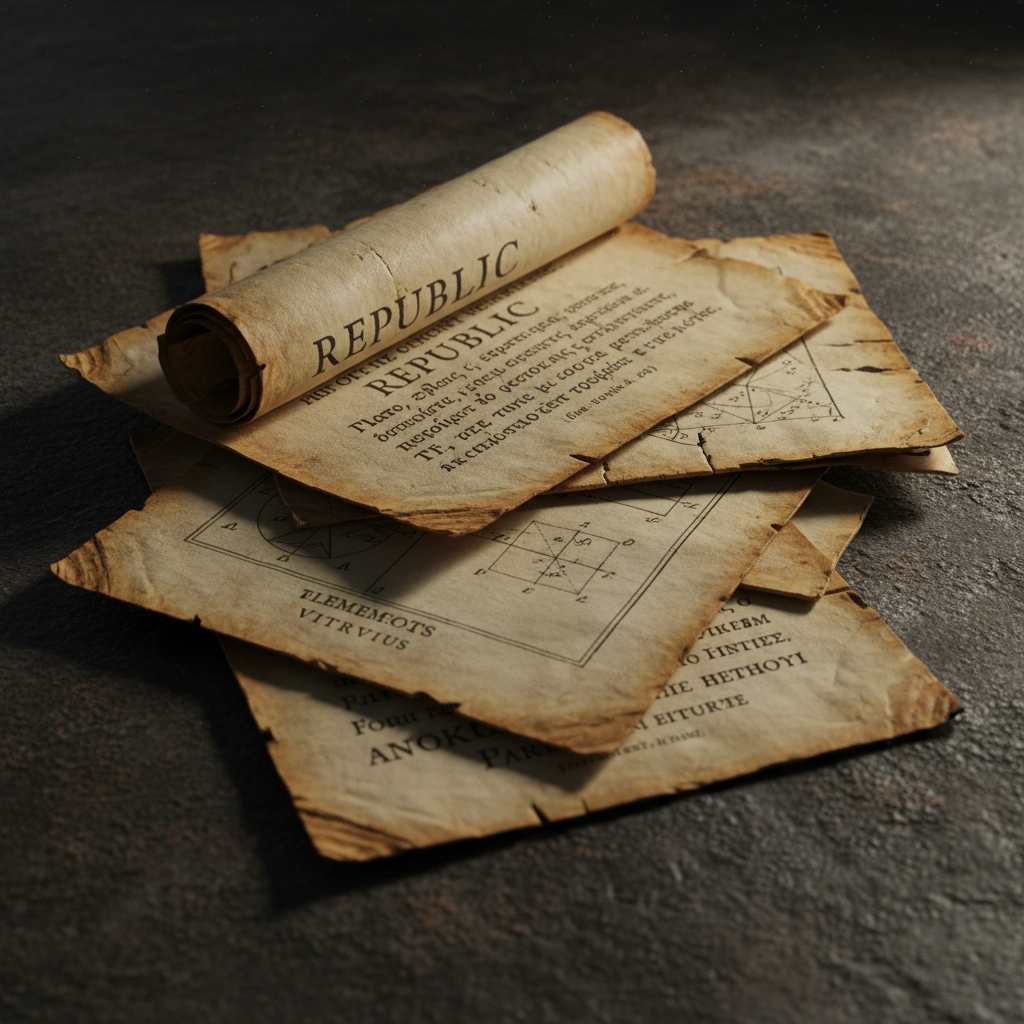
The Blueprint
The city has a soul.
This is the part of the site where, if you want, you can go all the way down.
Why this page exists.
Most of buildcivilization.com is about the land, the offer, and the application. That is on purpose. You do not need to understand what is on this page to join us.
But if you want to know why we believe this is going to work — not just financially, but structurally, at the level of how a city actually produces good lives — this is where we explain it. Five sources. One synthesis.
The Republic.
“The city is the soul written large.”
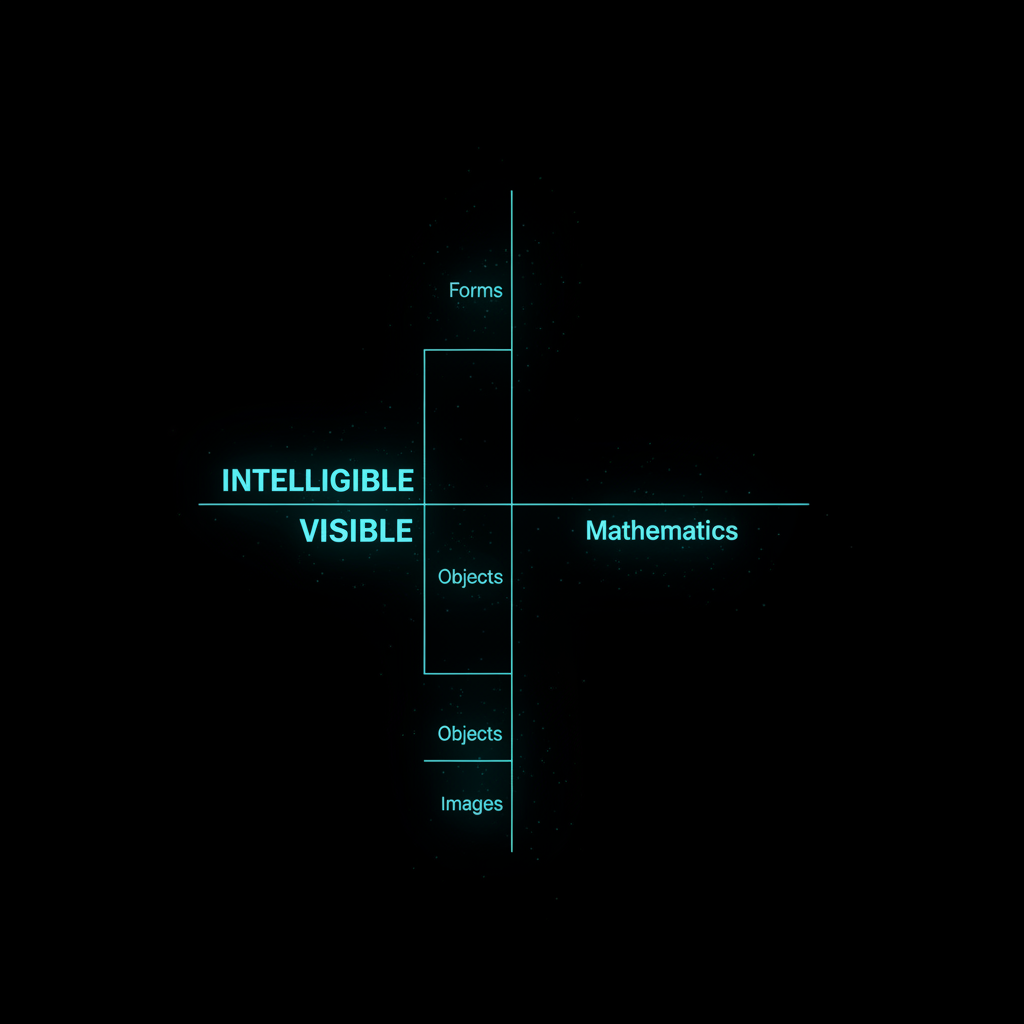
Plato’s Republic has been read for 2,400 years as political philosophy. When you stop reading it that way and start reading it as an engineering specification, everything changes.
The Republic describes a city where happiness is the proper ordering of its parts — a rational layer that contemplates the Good, a spirited layer that acts on it, and an appetitive layer that wants things. Happiness, in a person or a city, is structural harmony. Not the absence of pain. Not the presence of wealth. Not a feeling. A proportion.
If this is right, then a city designed around the specification should produce happy citizens by default, not by accident. That is the bet. The Republic gives us the architecture of the whole.
The Laws.
“A city should have a calendar, not just an economy.”
Where the Republic describes the structure, Plato’s Laws describes the texture. The daily rhythm. The festivals. The way time itself is organized so that work and celebration are not separate activities but the same activity seen from different angles.
The Laws specifies a life built around daily rites and monthly festivals, one per god, one per domain. Athenian festivals were roughly a quarter of GDP. That is not waste. That is the city investing in the thing that makes its people want to stay.
We are bringing this back. Not as cosplay, but as operations. Every month in The Living City is a festival month honoring one of the twelve domains — wisdom, manufacturing, agriculture, defense, arts, trade, and so on. The festival is not a break from work. It is the frame within which that month’s work happens.
The Philebus.
“The machine has to know the difference between appetite and a good life.”
Plato’s Philebus is the least-read of his major dialogues and the most important for our work. It answers the question every city eventually has to face: what do you optimize for?
Modern platforms optimize for appetite. More engagement. More consumption. More of whatever the user clicked on last. The Philebus says that is precisely backwards. It describes how to combine pleasure and intelligence, appetite and reason, in proportions that produce both happiness and goodness. Not your impulses. Your best self.
The Philebus gives us a hierarchy of the Good: measurement at the top, then beauty, then wisdom, then the sciences, and pure pleasures at the base. It gives us a taxonomy of desire. It gives us the tripartite soul — rational, spirited, appetitive. And it gives us a flow: desires flow in, get organized, get transformed into forethought, align on the Good, and output action.
This is the specification we are writing the kernel around. The city’s coordination engine does not maximize appetite. It orders desire. It helps you become what you are trying to become, not just consume what you last consumed.
Vitruvius.
“Beauty is not decoration. It is operational.”
For the physical city, we use Vitruvius — the first-century Roman architect whose Ten Books on Architecture became the foundation of classical Western design.
Vitruvius specifies six principles every built thing should satisfy: order, arrangement, eurythmy, symmetry, propriety, and economy. These are not aesthetic preferences. They are structural requirements. A building that satisfies all six works. A building that does not, fails — not because it is ugly, but because it does not serve the people who use it.
Vitruvius also gives us construction as rule-and-compass in the Euclidean sense. Designs are reproducible, teachable, and certifiable. Every building, street, and zone passes through these six principles before it is built. Beauty in this system is not something you add at the end. It is the evidence that the design is correct.
Mondragón.
“The economics have to work in the world we actually live in.”
Plato describes the structure. Vitruvius describes the form. Mondragón proves the economics work.
Mondragón Cooperative Corporation is a federation of 80,000 worker-owners in Spain’s Basque region. Founded in 1956. Current revenue: $12.9 billion annually. It has survived the Spanish Civil War, the Franco regime, the 2008 financial crisis, and a global pandemic.
Our operator model is drawn directly from Mondragón. Zone operators own their enterprises outright. The city provides land, infrastructure, and coordination. The operators provide capital, expertise, and work. Profits belong to the operators. Decisions that affect the whole city run through governance structures modeled on Mondragón’s federal council.
This is not untested idealism. This is a seventy-year-old proof that cooperative economics can operate at industrial scale, in bad economies, under hostile governments, and still grow.
The synthesis.
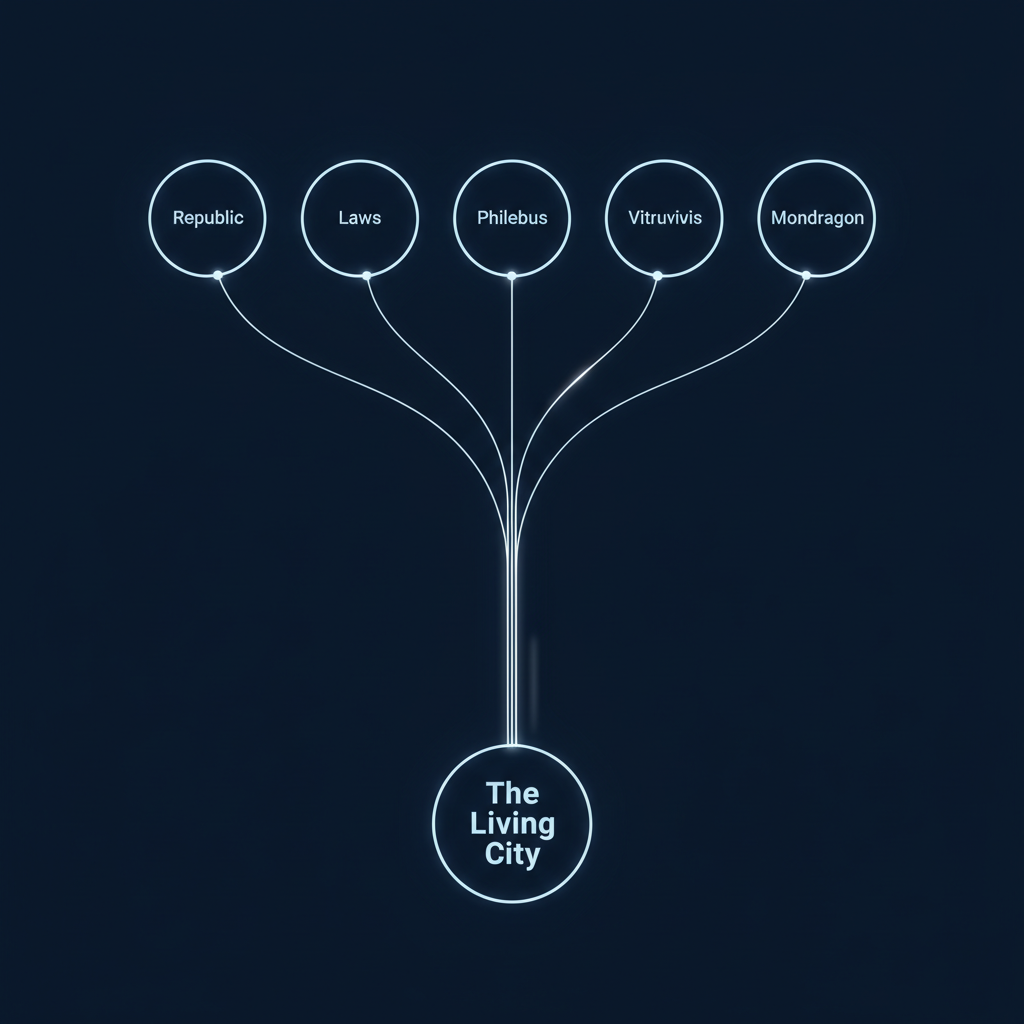
Put it together and here is what you get:
- •The city’s structurecomes from Plato’s Republic.
- •The city’s daily texturecomes from Plato’s Laws.
- •The city’s kernelcomes from Plato’s Philebus.
- •The city’s physical form comes from Vitruvius.
- •The city’s economicscomes from Mondragón.
- •The city’s land comes from the Cumberland Plateau.
- •The city’s financing comes from Tennessee utility district law, federal and state grants, and cooperative operator capital.
Every piece has 2,400 years of precedent, 70 years of modern proof, or both. Nothing here is untested. What is new is the combination.
Further reading.
If you want to go deeper, these are the texts that formed the specification. Every one is in the public domain.
- Plato, Republic
- Plato, Laws
- Plato, Philebus
- Plato, Timaeus
- Euclid, Elements
- Vitruvius, Ten Books on Architecture
- José María Arizmendiarrieta, writings on Mondragón